
Spinal Stenosis
Spinal stenosis is a narrowing of the spinal canal. Most often, this is due to a variety of contributing factors including:
- Disc material bulging or protruding into, and narrowing the spinal canal. This included disc bulges, disc protrusions, and herniated discs.
- Arthritic bony enlargement of the facet joints. On an MRI report, this will be indicated with the term facet hypertrophy or facet arthropathy. Simply put, this is osteoarthritis and degenerative arthritic changes that occur in the joints on the back side of the spine.
- Thickening of the ligamentum flavum – a spinal ligament inside the spinal canal. This ligament is designed to provide stability and limit excess movement in the lumbar spine. Unfortunately, due to injury or instability in the lumbar spine, the ligamentum flavum will thicken or hypertrophy, to provide extra stability and stabilization to the injured lumbar spine.
- Misalignment of the vertebrae in the lumbar spine (subluxation or spondylolisthesis). Shifting forward or backward of one bone on top of the other creates a narrowing of the spinal canal, and potential pinching of the spinal nerves as they exit each spinal level.
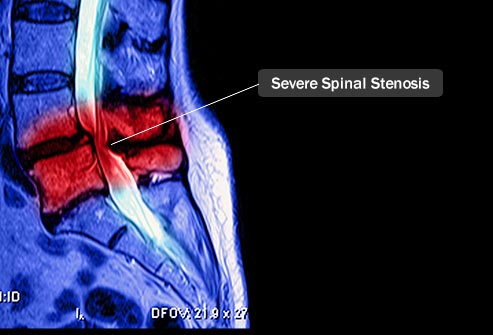
As you can see above, central canal spinal stenosis is a narrowing of the central vertebral canal which creates an “hour glass-like” narrowing of the spinal canal, and subsequent nerve compression and impingement.
Spinal Stenosis Treatment
The DRX 9000 True Non-Surgical Spinal Decompression System provides lasting, corrective relief for patients suffering from spinal stenosis. For more information, or to see if you are a good candidate for DRX Spinal Decompression therapy, contact our office at (877) 962-5416.